


David Smith, Director of Planning & Communities, reflects on this year’s Chamber Annual Conference.
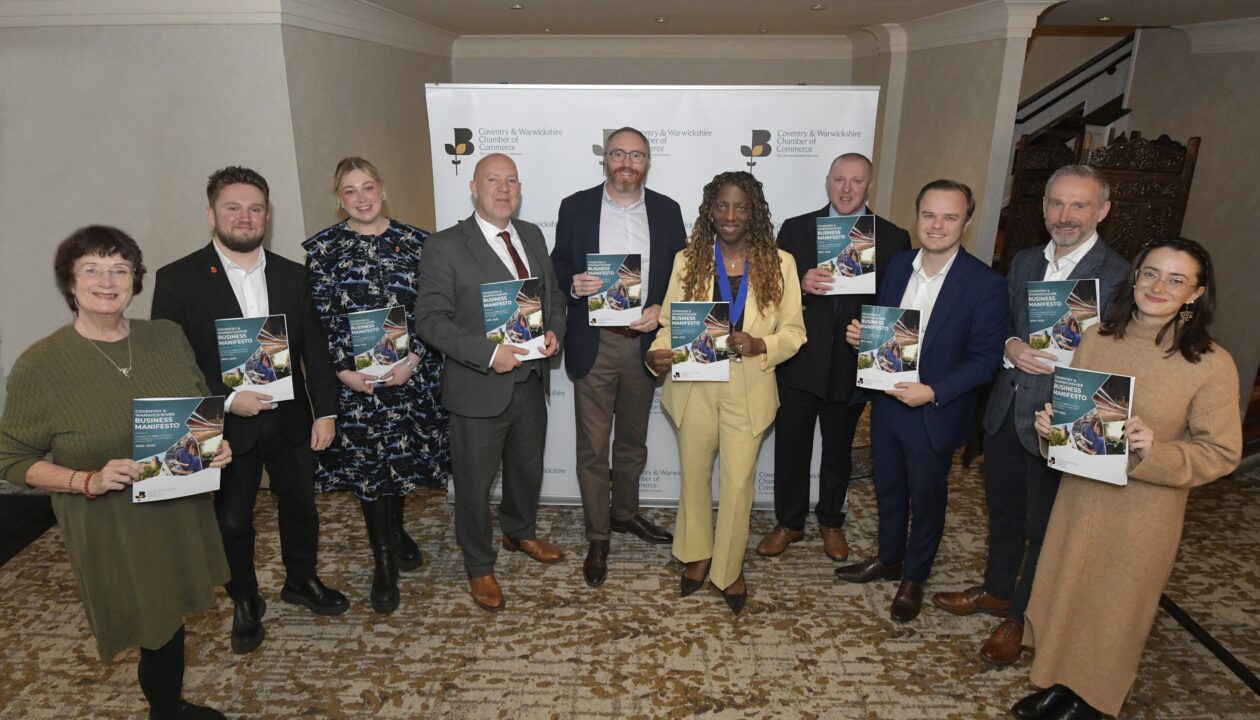
The launch of the Coventry & Warwickshire Business Manifesto 2026–2030 was an important moment at this year’s conference, setting out practical steps to tackle the barriers holding back economic growth across the region.
Produced by Coventry and Warwickshire Chamber of Commerce alongside think tank Centre for the New Midlands, the Manifesto draws on the experiences of dozens of local businesses and decision-makers. It identifies five priorities: infrastructure and connectivity; business support and innovation; skills shortages; net zero and sustainability; and local government review and devolution.
IM Properties sponsored the Infrastructure & Connectivity theme, reflecting our commitment to responsible development that supports thriving communities, attracts investment and enables long-term growth.
For us, a suitable pipeline of land and premises, backed by investment in transport, digital and utility infrastructure, is fundamental to a successful regional economy. Delivering it requires clear, efficient processes and effective collaboration between developers, local authorities, infrastructure providers and communities.
The Manifesto’s launch provided a useful focus for the wider conference discussions, with practical recommendations we welcomed, including a developer and planner forum alongside other measures to bring more transparency to the issues affecting our sector and to help employment land projects move forward more quickly.
Business Ambition Needs to Be Matched by Government
A key theme throughout the conference was that businesses have the ambition to grow, but do they have the framework, support and confidence to commit?
Those conversations began the evening before, at a dinner at Ashorne Hill with Chamber Chief Executive Corin Crane, British Chambers of Commerce Director General Shevaun Haviland, sponsors of the Manifesto and the local chamber team.
In a wide-ranging discussion about the economy and our markets, the broad assessment of the recent Budget was “steady as she goes”. But with businesses facing sustained cost pressures and difficult investment decisions, there was a clear appetite for greater ambition.
One figure that particularly struck me was the British Chambers of Commerce’s finding that domestic policy-driven costs for a typical SME have risen by more than 70% over the past decade. It underlines the pressure businesses face when deciding whether to invest, recruit or expand.
That concern carried into the pre-conference breakfast, where my colleague Matthew Fox, Planning Director at IM Properties, joined a half-hour Q&A with Shevaun Haviland and Sheridan Sulskis from Coventry and Warwickshire Reinvestment Trust. Focused on finance and the Budget, the discussion was particularly critical of the lack of government ambition to support business growth.
Closing the Gap Between Policy and Delivery
From a development perspective, progress has been made, but frustrations remain. National policy has moved in a more positive direction, particularly in recognising the importance of logistics to the economy, yet the planning system at a local level continues to struggle to keep pace with businesses’ appetite for investment.
At local authority level, stretched resources, bureaucracy and political uncertainty continue to slow delivery. From our experience, the journey from first engaging with a local authority to getting a spade in the ground can take as long as ten years.
For businesses looking to expand, those delays can mean suitable premises are unavailable when they need them, holding back recruitment, productivity and investment. For developers, they make it harder to respond to demand at the right time.
Delivering schemes at scale requires confidence over many years. Businesses need a consistent policy direction across political cycles, alongside local authority planning teams with the resources and capacity to make timely decisions.
Connecting AI Ambition with the Infrastructure Behind It
The need to connect ambition with delivery was also evident in the discussions about AI, which ran throughout the dinner and conference.
Coventry University’s session on building AI capability and its potential to improve processes and efficiency provided further food for thought. I left wanting to make more time to explore how it could help our teams work more effectively.
These opportunities depend on data centres, power and digital connections. As we embark on our data centre journey, we are considering how projects can support the growth of the digital economy while delivering tangible benefits for surrounding communities.
As a socially responsible developer, this is central to how we approach new schemes and a key principle of our Sustainable Futures Strategy focussing on People, Planet & Place.
I was encouraged to see the Government bring forward the Data Centre Covenant alongside work on a National Policy Statement for the sector. It suggests serious thought is being given to both the framework for delivering this infrastructure and how data centres can have a positive impact on the places in which they are built.
That early consideration matters. Listening to local concerns, explaining the purpose of new infrastructure and identifying meaningful opportunities for local people are essential to building confidence in development.
Putting Community Benefit into Practice
Our recently submitted Toddington Park application, brought forward with Moto at Junction 12 of the M1, illustrate how we are approaching these considerations.
The plans include around 200,000 sq m of industrial, logistics and data centre space, with the potential to create up to 1,400 jobs. They would also open more than 20 hectares of green space for community use, alongside new recreational routes and wildlife habitat improvements. A wider social value proposition, informed by a clear understanding of local needs, will also ensure positive socio-economic outcomes accompany the physical infrastructure we are delivering on site.
An extension to Toddington Southbound Services would add more than 300 HGV and eHGV parking spaces and improved driver welfare facilities, supported by solar energy and battery storage.
Making the Region’s Voice Count
Alongside the discussions about infrastructure and technology, devolution raised questions about how the region can best develop a unique ‘identity’ and secure the investment it needs. I asked the business panel whether the way it is developing across our region would maximise economic growth.
Different structures and different speeds of change raise concerns about how places secure representation and investment, particularly those outside or between combined authorities (as is the case in Coventry & Warwickshire with the adjoining WMCA). Businesses need clarity about who makes decisions and confidence that opportunities will be recognised across Coventry and Warwickshire.
The day also offered a reminder of the resilience required to maintain business growth. Entrepreneur Rob Law’s reflection that “rejection isn’t the end, it’s redirection” particularly resonated with me. Development requires patience and persistence, and setbacks often demand a fresh approach.
I left encouraged by the quality of the discussion and the willingness to work together, but conscious that businesses need to see delivery.
As the Chamber takes the Manifesto forward through its Business Assembly and a further event in Parliament, the task is to turn its recommendations into measurable progress. For IM Properties, that means working with local authorities, infrastructure providers and communities to unlock investment and deliver the employment space businesses need to grow.
Top of Form
Bottom of Form
Authors


Back to news page