


Rob Hemus is Asset Director at IM Properties and has been playing his part in delivery of the company’s Sustainable Futures strategy and further strengthening its investment portfolio from best in class working environments to best in class for their Environmental Social Governance (ESG) credentials.
Here Rob talks about the importance of transforming existing buildings into more positive, socially responsible assets and how the team took some run-down industrial buildings and created a more people focused, fully let, EPC A+ rated sustainable scheme.
IM Properties’ journey towards Net Zero through its Sustainable Futures framework is now integral to the way we do business from how we fund our projects through green finance to the way we deliver and asset manage our schemes.
And like so many property companies, ESG has also become central to our investment strategy, not just because we think it’s the right thing to do, but because it’s what modern occupiers require for their own sustainability and social values, to attract and retain talent.
A responsibility to change
From an environmental perspective a huge amount of existing commercial stock falls short of ticking any green credentials and that’s a major concern, contributing significantly to the 40% of carbon emissions the real estate sector is responsible for. We all need to take action to change this.
By partnering and working with the not-for-profit organisation, Better Buildings Partnership (BBP) we’re now part of a movement of commercial property investors and developers signing up to a climate commitment to improve their portfolios buying best in class sustainable assets as well as improving the efficiency of older, existing buildings.
By using our scale and influence, we can lead from the front and encourage others to innovate and push the boundaries ahead of regulation, to reduce energy consumption across their portfolios.
Our aim is to implement more sustainable thinking on every level by proactively engaging with our occupiers to our supply chain including our contractors, sub-contractors and managing agents, so over time we develop and encourage more positive behaviours which are good for the people, place and the planet – the three pillars of our Sustainable Futures strategy.
South-east appetite
It’s an exciting and hugely rewarding process transforming existing, older buildings into high quality, sustainably led stock and if you’re willing to invest, it’s a good way to create growth in a tight competitive southeast market.
Yorkton Street, Hackney is one of our latest multi-let industrial schemes in the region which has demonstrated there’s a real appetite among occupiers for buildings which have strong ESG credentials. 80 per cent of the scheme was signed up to prior to practical completion, with the final unit now also let.
As you would expect with a scheme offering access to some of London’s most populated areas, two rapid delivery service operators were quick to snap up the units. The first, taking units 5 and 7 was Deliveroo Hop, a new concept from the well-established fast food delivery company, Deliveroo, now offering groceries direct to your doorstep.
The remaining unit was let to digital, urban logistics company Bodo. An App-based business offering same delivery for businesses looking to capture more customers who want goods instantly.
Improving efficiency
We acquired the three-unit scheme in East London in December 2020, seeing its potential as a prime last mile delivery location, sitting within a densely populated residential neighbourhood hub with access to 2.7m households within a 30-minute drivetime.
And while many other property companies were waiting in the wings to see what the outcomes of the pandemic were, we pushed forward with our investment for the scheme in 2021, with a full-scale refurbishment completing in March 2022.
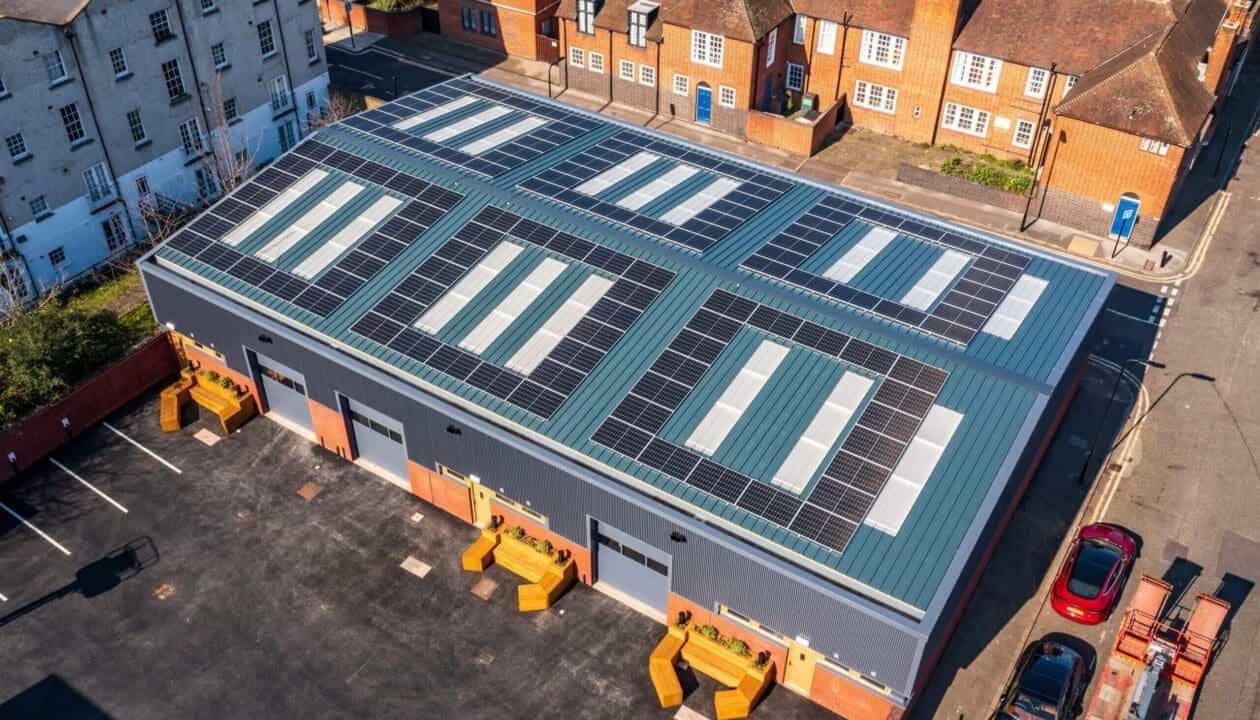
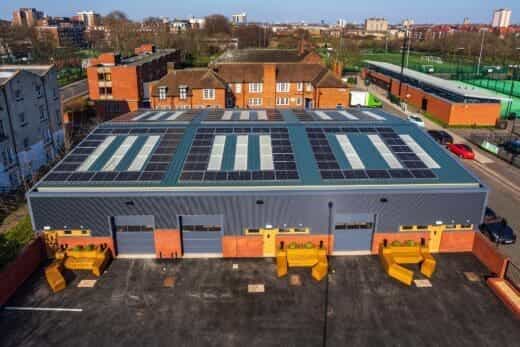
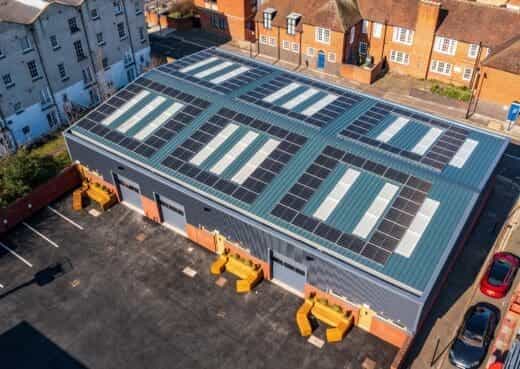
We stripped the units right back to do a deep structural retrofit to ensure maximum long-term viability, replacing the cladding with a modern anthracite grey colour palate, the roof and windows with more thermally efficient versions and then a raft of other sustainability and wellbeing features.
These included PVs on the roof of the units to create a 100% renewable energy system, EV charging points and a bike shelter for up to 14 bikes to encourage low carbon travel.
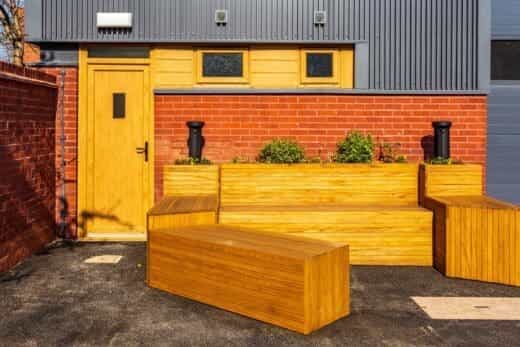
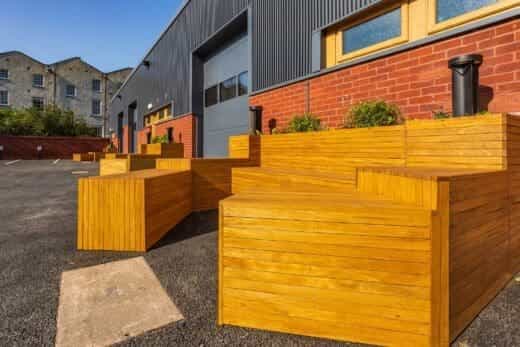
A brand new contemporary outdoor seating area framed by a green wall was also incorporated to improve the overall aesthetic and quality of the working environment, whilst providing a much-needed breakout and outside space to look after staff wellbeing. Not the traditional design of a multi-let industrial scheme.
The result
The outcome of the improvements has meant a significant jump in EPC ratings to A on two of the units with unit 5 achieving an A+, which is an outstanding achievement for a refurbishment. An A+ showcases the efficiency of the building and reduces the occupational costs which is something we are all extremely proud to have achieved.
Improved EPC ratings will be key to letting old buildings in the future, with UK targets set for all buildings to be B rated by 2030. But we’re not looking at achieving the bare minimum, we want to set the bar high and let our actions do the talking and we are constantly striving to do more where we can.
Refurbishing existing building can also have a deeper impact on its carbon footprint. In most cases embodied carbon is less than if you knocked the building down and started again. Currently the embodied carbon associated with the construction of a typical new building can be equivalent to 20 years’ worth of its operational carbon emissions, so there’s a big environmental advantage.
Of course, refurbishment isn’t always an option, but where we can, we will and Yorkton provides a template for what’s possible and can be achieved. It adds an exciting dimension to asset management and a new way of thinking, which for me personally with a young family who will reap the future benefits, is a very welcomed.
Authors

Back to news page